
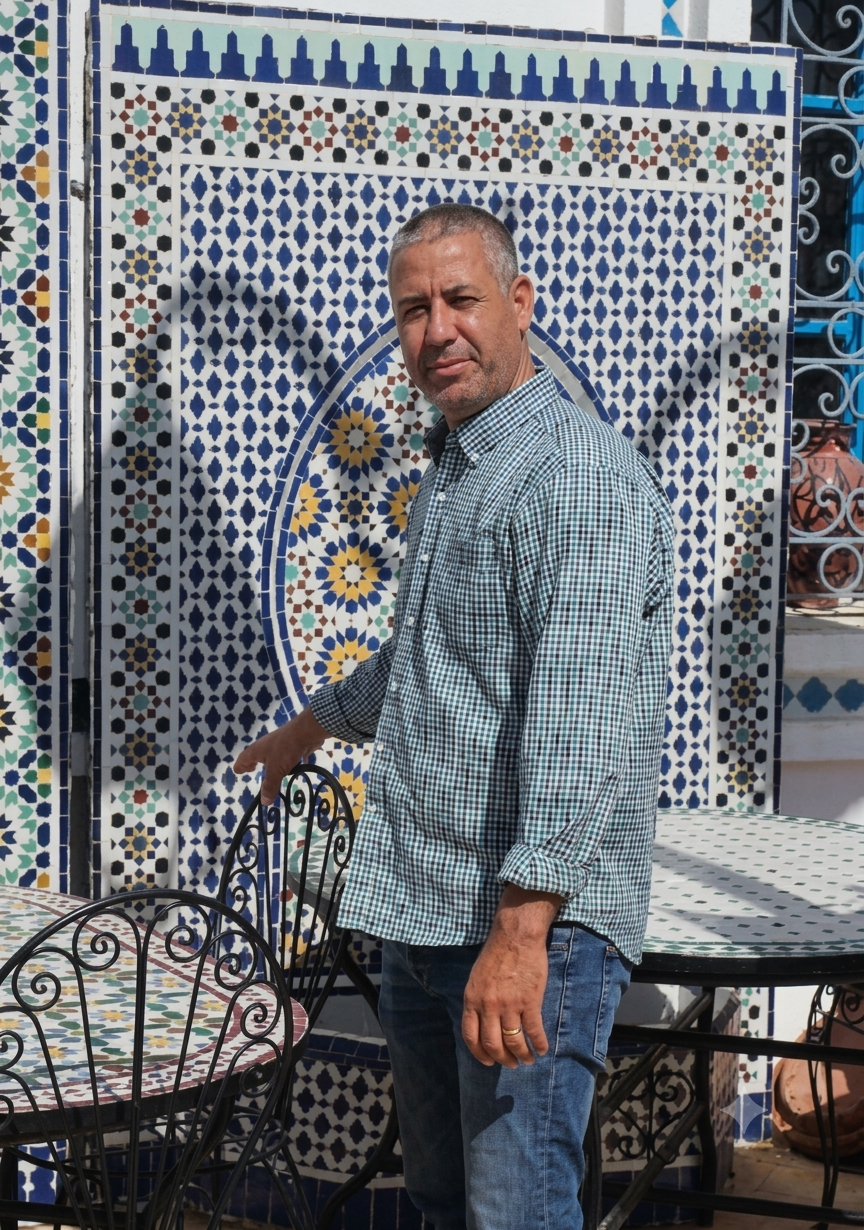
A nine-century process with contemporary relevance
Authentic zellige production follows a sequence refined over centuries: clay selection, forming, drying, glazing, firing, hand cutting, and final assembly. Each stage directly shapes geometric precision, color depth, and long-term durability.
Five production stages
- Clay selection and preparation
- Forming and drying
- Glazing
- Kiln firing
- Hand cutting and assembly
Stage 1 — Clay preparation
Production begins with carefully selected clay from the Fez region. It is filtered and stabilized to reach the plasticity required for consistent forming and kiln performance.
Stage 2 & 3 — Forming, drying, and glazing
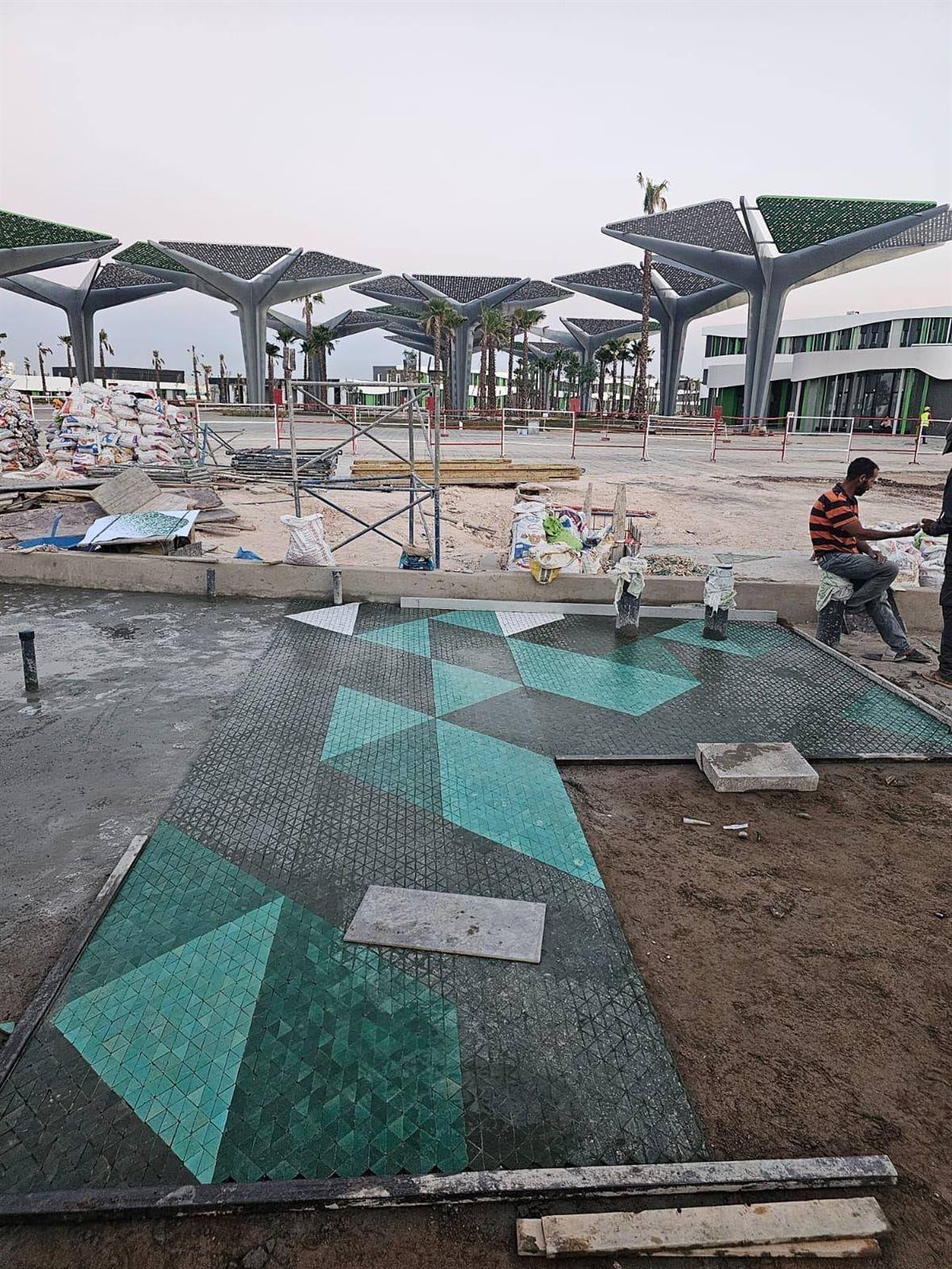
Tiles are formed, dried under controlled conditions, and glazed with mineral-based formulations. Variation is curated rather than random, producing a living surface with compositional coherence.
Stage 4 — Firing
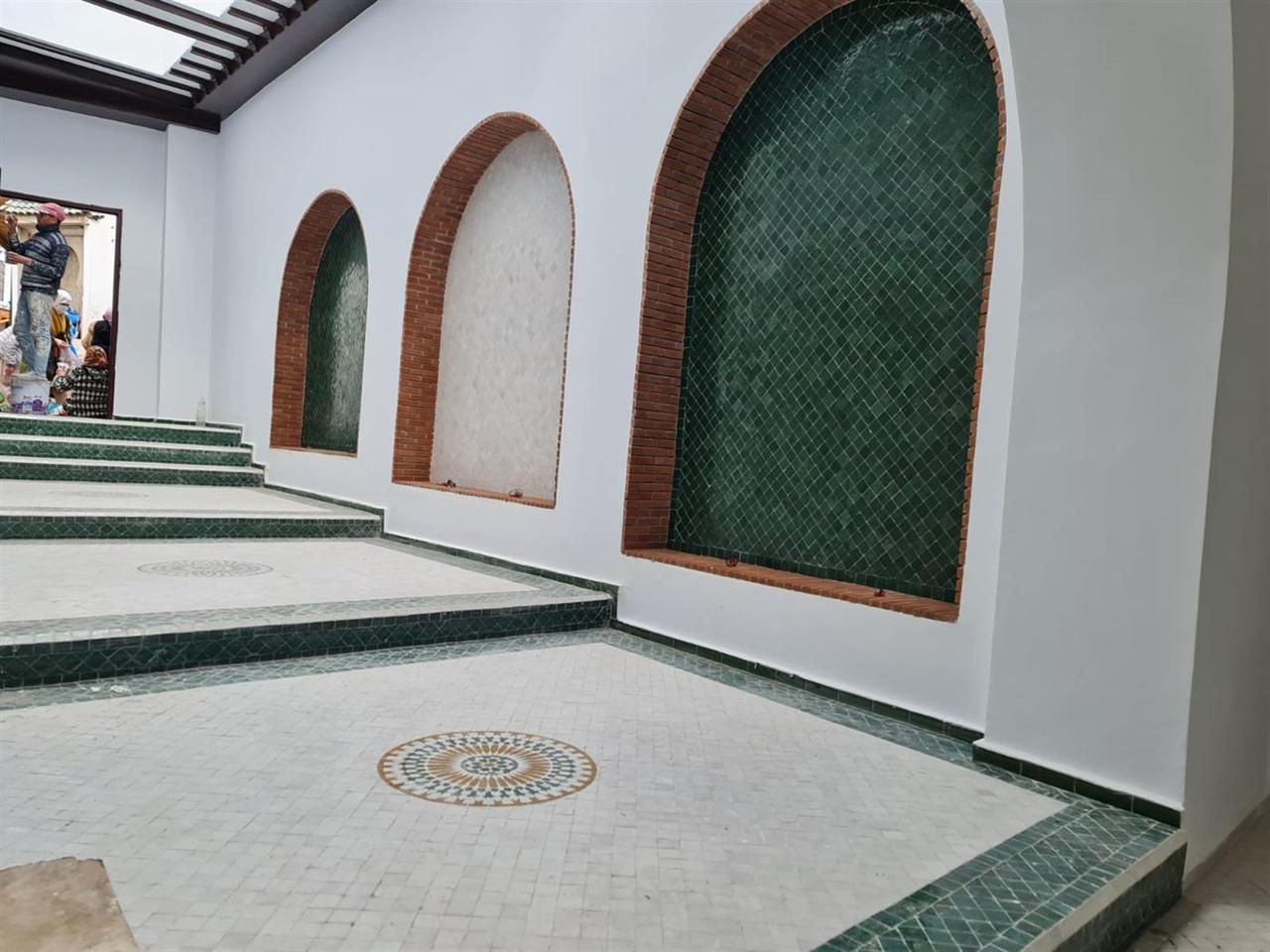
Firing temperature and cooling rhythm determine structural strength and glaze behavior. Quality control is uncompromising: only stable pieces proceed to the next stage.
Looking for authentic workshop-grade quality?
TRAVTAZI manages the full chain, from raw material to installation, with disciplined project follow-through.
Stage 5 — Hand cutting with qaddoum
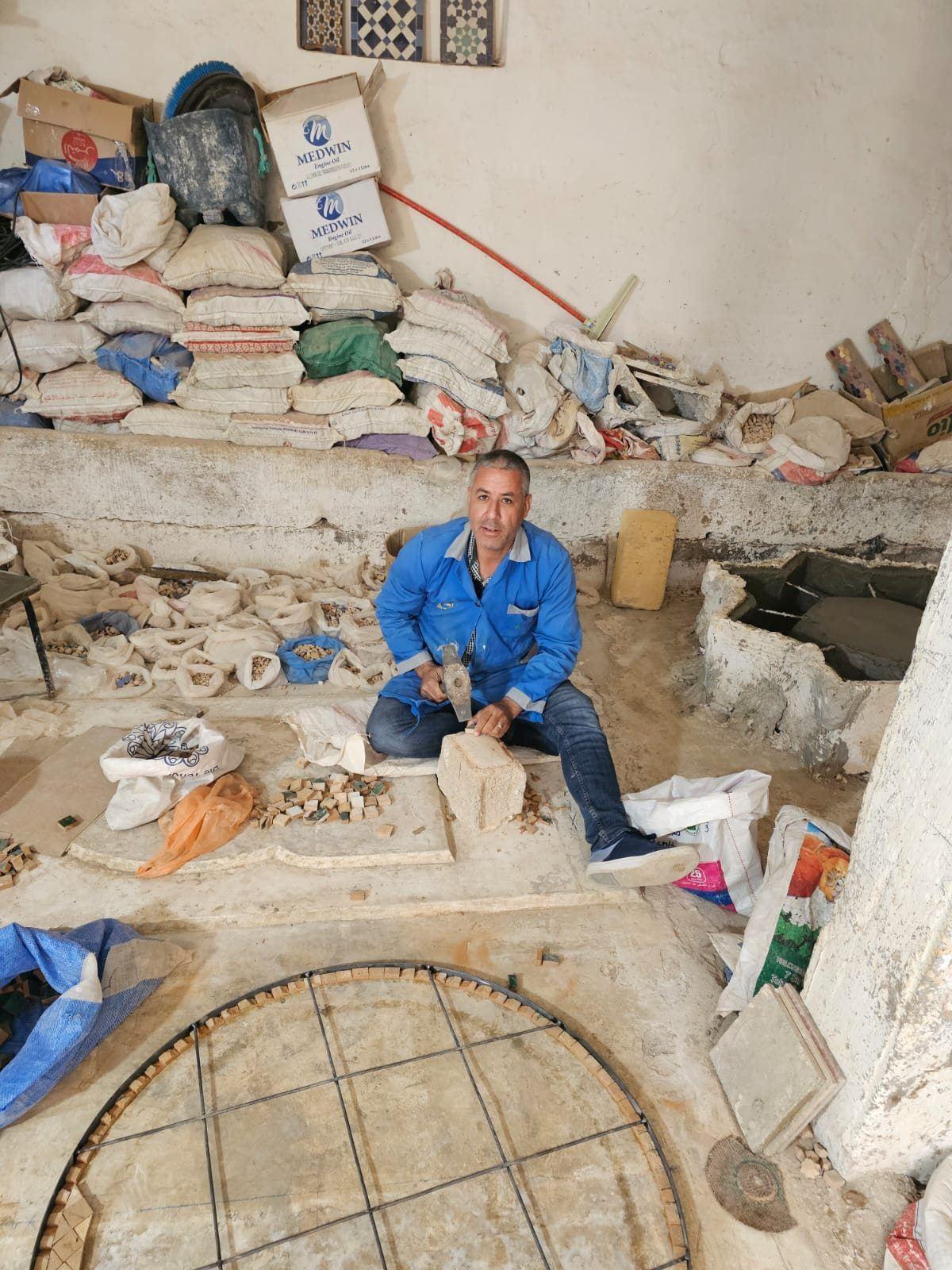
The qaddoum stage is decisive. Hand cutting transforms fired tiles into precise modules for stars, polygons, and transitions. Precision at this step defines the visual integrity of the final composition.
Composition and installation
Modules are assembled face-down into pattern matrices before bedding and installation. This method ensures motif continuity and dimensional control on site.
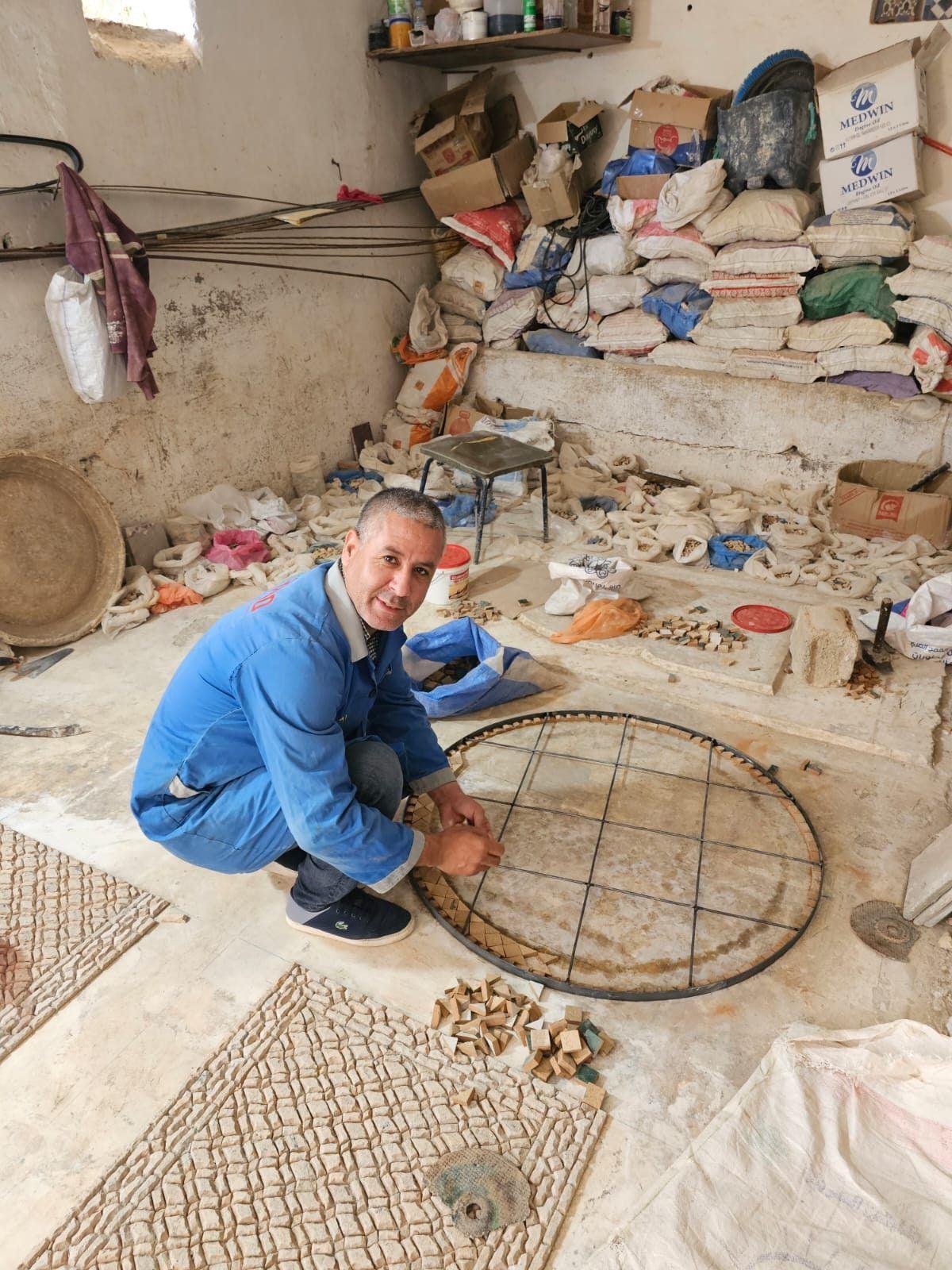
“Precision is not a style; it is a discipline. The qaddoum rewards only trained hands.”
— Abdelhafid Aït Touil